High Street VS Amazon
In 1994, town centres were packed with busy shops and an empty shop in the high street was rare. This gave people lots of opportunities to interact, see familiar faces and connect with one another. It gave people the chance to feel a part of a community and have a shared experience.
In the 1990s there was a “town-centres-first” policy to support and encourage high street shopping.
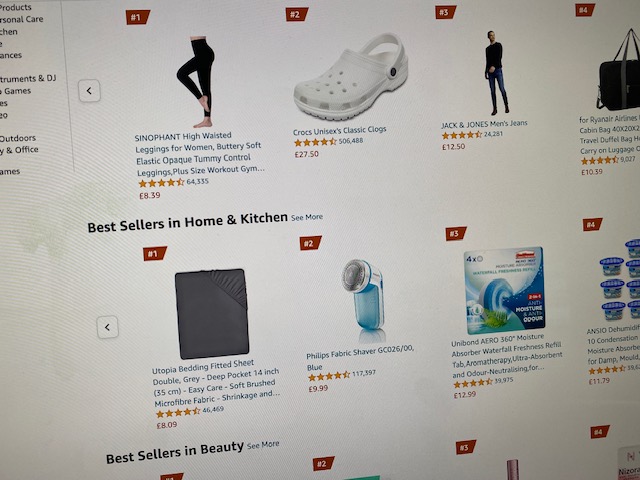
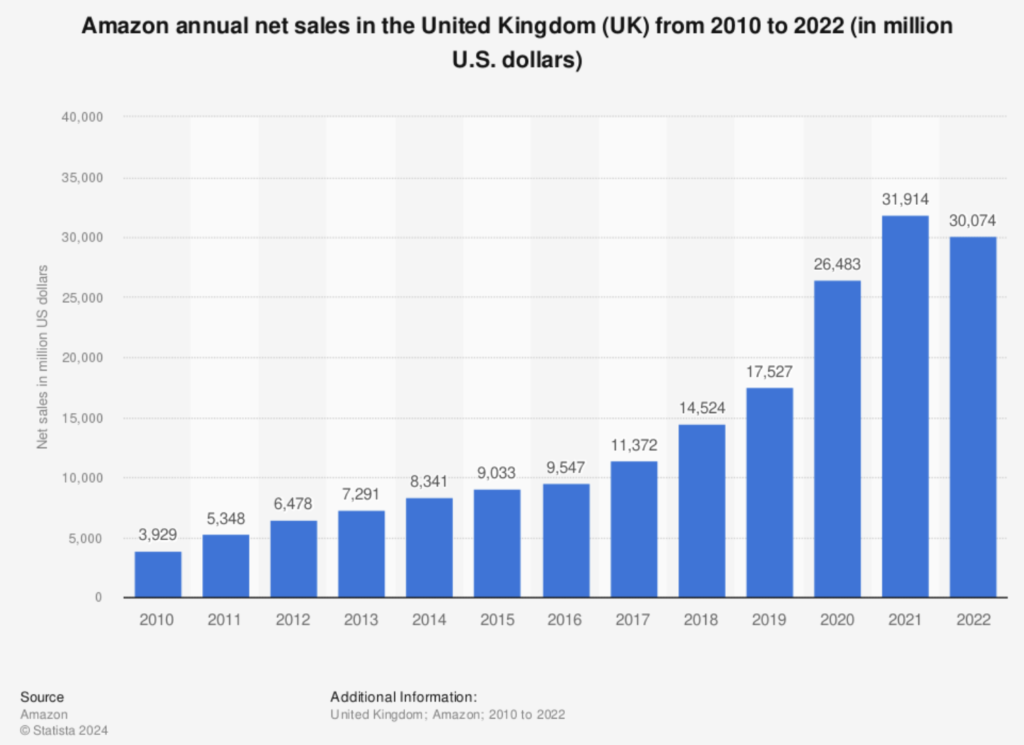
However, rise of online selling has had a massive impact on the high street. Amazon.co.uk started in the UK in 1998. Its aim was to make life easier with great value, selection and convenience. It quickly became popular. Since 2010 Amazon UK sales have increased from £4 million to nearly £32 billion. British households now spend more money online than any other country in the world Mintel, ecommerceDB There are many online retailers now, but Amazon is the most popular and sells over 250 million products.
This table shows the massive increase in Amazon sales from 2010 to 2022. Each one of these is a visit to a shop that is no longer needed.
Now, one in ten shops in the high street are currently empty. 2019 saw 16 chain stores close every day and 7,219 chain store shops closed in 2021. The Centre for Cities, an independent urban policy research unit, says that approximately 50,000 shops were lost from UK high streets between 2010 and 2020 and this number continues to rise.
According to the Centre for Retail Research, more than 11,000 major high street outlets have gone bust since 2008, these include BHS, Debenhams, Wilkos and Woolworths. Other previously popular high street shops have been gobbled up into other shops. For example, now it is rare to see an Argos branch on its own, as many are now inside Sainsbury’s.
“It’s the stuff of nightmares. You wander down a road where most of the shops
Kevin Rushby
are boarded up. Even the charity shops have closed down.
Here is a table showing why people use Amazon:
| Reason | Percentage of users |
| Fast and free shipping | 80% |
| Broad collection of items | 69% |
| Prime membership | 65.7% |
| Best Pricing | 49.2% |
| Easy returns process | 43.7% |
Therefore, the high street and shopping trends have greatly changed from 1994 to 2024. Online shopping bring many benefits, but it has an downside of increasing isolation. In 1994, the way to buy things was to go to the high street and interact and mingle with others. However, now, shopping requires no interaction, only a few clicks online. This means that we are more segregated and more atomised.